
Review of Harold Senkbeil’s ‘The Care of Souls’
Harold L. Senkbeil. The Care of Souls: Cultivating a Pastor’s Heart. Bellingham, WA: Lexham Press, 2019. 290 pp. $21.99.
The church’s thinking about its own normative experiences, and therefore the necessary emphases of pastoral ministry, exhibits a constant tension between two poles that could be called ritual and revival. Revivalistic thinking tends to see the church’s life as a search for dynamic, tectonic-shifting encounters with grace. Pastors’ aims, therefore, must be big, transformative, and radical. Ritualistic thinking, on the other hand, tends to see the church as a garden under the slow drip-irrigation of grace and truth, especially through formal worship gatherings, which nourish the saints through seasons and years until everyone finally makes it home. This emphasis focuses the pastor’s perspective on the small, ordinary, and cyclical things of ministry.
These interests need not be mutually exclusive, but may instead pull against one another in a constructive tension. However, the revivalistic perspective receives far more representation in books that continue to be published in pastoralia. Reasons may be several, but one obvious factor is that promising the secret of a dynamic, life-changing breakthrough for the pastor or church stands a better chance of achieving healthy sales than a work championing the ordinary. Ministers are not immune to the folly that takes one’s eyes off quiet discernment in favor of the exciting possibilities that ever loom over the horizon (Prov 17:24).
But the constant and unchecked pull of revivalism inevitably loads pastors with pressure and leads to exhaustion or worse. For this reason, there is great refreshment to be found in the rare book that stresses the freeing simplicity of a steadier and more ordinary way to inhabit the pastorate—one that likens ministry less to taking a start-up through an IPO, and more to a farmer milking his cows on a brisk winter’s morning. Harold Senkbeil has written The Care of Souls to fill this space. He aims to liberate readers from false models of the pastorate and call them to the classical discipline of soul-care as dispensing God’s gifts in Christ that the pastor himself continually learns and receives. As Michael Horton well describes in the book’s foreword, Senkbeil writes to focus shepherds on a certain habitus, a learned way of being in the world, rather than on such superficial techniques as are commonly found in books of this genre (xiii).
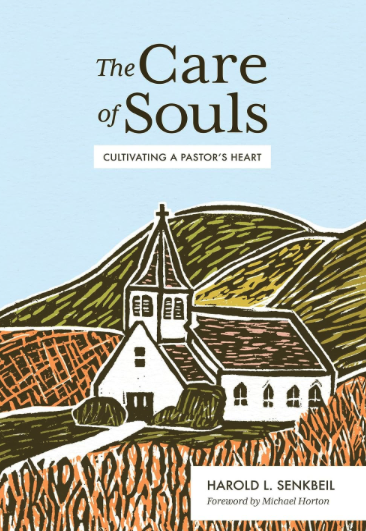
Writing primarily to pastors and ministry students (xvii), Senkbeil defines and champions what he identifies as the “classical heritage of the ‘care of souls,’ as it is called in the church’s collective tradition” (xix). The risen Christ’s call to Peter, “Feed my sheep” (John 21:17), provides the clearest encapsulation of this way of viewing the pastorate. “This,” claims Senkbeil, “is the secret for sustainable pastoral work: You need to realize that you’ve got nothing to give others that you yourself did not receive. . . . It’s being one more link in the unbroken chain of love that extends all the way back to Calvary” (xx). The pastor is not the origin of what the sheep need. This comes from Christ himself (xxi). “The essence of pastoral work is to bring the gifts of the Good Shepherd to his sheep and lambs” (19).
This conceptualization—pastoring as dispensing Christ’s gifts as a receiver of them—is the source of power in ministry and the secret to avoiding unrealistic expectations, despair, burnout, and moral failure. It also suggests a corresponding manner of being and working in the pastorate—the habitus. Pastoral care is an art, much like farming (2). It calls for patience, rather than rushing and forcing results (3–5). It requires prayerfully probing and listening to church members as they tell their stories, with ears tuned to clues about what God is doing in their lives and how they are responding (67–91). Christ’s active work among his sheep, on his own timetable, both frees and requires the pastor to enjoy his work—not just the results, but the work itself, because it is never done (6).
Many of the hazards of pastoral ministry stem from misunderstanding the role. Senkbeil promotes what he calls the classical view, over against popular modern rivals: the pastor as coach, manager, or CEO (8). No, the pastor is a steward of the mystery of Christ (Col 2:2), which is manifest in preaching the gospel and administering the sacraments (10–11). These, after all, are Jesus’s ongoing means of carrying out his ministry on earth (12–13). This classical model holds together the unchanging core of Christ and the truth of his Word, with context-specific flexibility in application (16–17).
After his chapter introducing this vision, Senkbeil spends the rest of the book explaining various facets of the pastoral habitus in view of the classical model. The book does not follow a tight and sequential argument from chapter to chapter, but rather unfolds as a series of loosely connected meditations. These discussions include the role of the Word of God in the soul and ministry of the pastor; diagnosis of people’s spiritual ailments; intentional treatment using the tools of Word and sacrament to combat the works of the devil, the flesh, and the world; the roles of guilt and shame; sexual purity and sanctification; spiritual warfare; the connection between mission and soul care; the need for each pastor to himself be shepherded; personal spiritual disciplines; and long-term steadiness. Amid such diversity, the unifying thread of an agrarian motif runs through the book, as Senkbeil recalls growing up on a farm and watching his father at work.
This book offers an effective unburdening for pastors who, consciously or not, may have imbibed revivalistic thinking about their own need to be powerful, ingenious, and transformative. In rejecting rival contemporary models of the pastorate and stressing instead the administration of Christ’s gifts and the habitus of soul care, Senkbeil presents a simplified scope of ministry. This streamlining liberates the reader from false expectations and pressures that Christ never intended him to face. True to Senkbeil’s Lutheran angle of approach, even amid mountains of practical wisdom and exhortation, there is no tenor of “Do more” in this book. Rather, the thrust is “Think differently,” and often, as a result, “Find rest.” It is the life-giving power of Christ, through his Word and Spirit (40–43), which does what the pastor himself cannot do in people’s souls.
The book exhibits a high view of Christ and his gifts, especially gospel and sacrament, a pair that sees frequent mention throughout the book. And it is no wonder why. These gifts “throb with vitality. They are filled to the brim with the energy and life of God’s own Spirit” (30; cf. 193). Again, such an emphasis puts the weight of ministry on Christ rather than the pastor himself. To be highly confident in these graces is to be well on the way to developing the pastoral habitus. The sufficiency of these gifts empowers the pastor to focus his life and ministry on proximity to Jesus rather than burning himself out with activism (193–94). Further, this high view of Christ leaves room for mystery, suggesting that there is always more to learn, more depth to plumb in understanding the gospel and its administration in pastoral ministry (12). Therefore, the minister is always digging, always growing, and always humbled about his task. It is in this light that the reader most fully comes to understand how the habitus transcends mere technique.
Another strength is that Senkbeil is wise with recognizing balances. For example, he identifies as one of the main challenges for pastors and churches: “To address what’s going on now not with the flimsy fads of pop culture but with the solid truth of the Word of God, rooted in Christ and extending throughout time and space” (62). He recommends a prudent combination of knowing the times and applying the timeless Word to them effectively. He also balances paying attention to emotions with caring for the whole soul (178). His application of the law/gospel distinction to the pastoral habitus provides another example of healthy balance (173).
The Care of Souls should prove helpful for any in the target audience, from seminary students to seasoned shepherds. It will especially aid a pastor who, through education, the fleshly ambitions of his heart, or passive intake from the evangelical culture, has imbibed an expectation that he must be radical and impactful and potent and dynamic. But it could shift paradigms and change the life of pastor who has spent some years trying on this model of ministry and feels its exhausting toll. (I realize the irony of claiming that a book which avoids normalizing dramatic transformation could end up being dramatically transformative. Radical change has its place.) To such a pastor, Senkbeil comes alongside and says, in essence, “Friend, there is another way. Christ is powerful through his Word and sacrament. You do not need to be your people’s savior; point them to the Savior they already have, even as you stay near him yourself.” This counsel comes with the humble tone that is formed by decades of battling, laboring, and sometimes failing.
However, the book is not without weaknesses. Senkbeil casts a wide net, bringing many topics and issues into consideration under the rubric of the pastoral habitus as a steward of the mystery of Christ. Usually, a clear connection binds the issue under discussion to this central hub of the wheel. At times, however, the connection is less clear. Likewise, looseness of structure can make it difficult to discern what binds a chapter together conceptually. The pieces are usually quite good, but sometimes they come in almost proverbial fashion. Similarly, some of the chapters are overly long and repetitive. The book could be edited substantially for length without much loss of content.
Readers from Baptist and independent perspectives will find some quibbles with Senkbeil’s denominational distinctives as they arise in the book. First is his Lutheran sacramentalism that suffuses his discussions of baptism and the Lord’s Supper (100–105, 191). However, even this poses a constructive challenge. How many Baptists or independents would think to include substantial reflection on the ordinances in a book on pastoral ministry? Perhaps Senkbeil’s perspective can push them to consider whether a less sacramental view of the ordinances causes them to overlook these powerful means of grace appointed by Christ for the good of his church. Even if one disagrees with Senkbeil’s theology of the sacraments, he must not neglect their potency and value. Similarly, at times the author reflects the Lutheran accents of over-centralizing justification (125) and recapitulation of one’s baptism (148–49), while omitting to endorse the third use of the law in his discussion of progressive sanctification (162, though see 128).
Some readers will disagree with Senkbeil’s treatment of the interface between pastoral ministry and outside secular counseling. For instance, he recommends that a pastor sometimes refer church members to a trusted psychologist for cognitive-behavioral care (180). He does not claim that the need for spiritual care thus ends, but that both the secular therapy and pastoral care continue side-by-side, even for unambiguous moral issues such as sex addiction (185).
These possible qualms aside, The Care of Souls offers pastors a compelling vision for a way of life and work that leans heavily on Christ’s powerful and sufficient grace for his people. The thoughtful chapter on mission as soul care (220–37) demonstrates that Senkbeil rejects revivalistic busyness not from apathy or smallness of ambition for Jesus’s glory. Rather, his embrace of the ordinary stems from a firm confidence in the Savior, a long view of ministry, and a humble appreciation for the pastor’s weaknesses as a creature and a sinner. The book offers neither a simple formula for pastoring made easy, nor even a tightly unified argument, but a pair of glasses for the pastor to try on, giving him a fresh and refreshing view of his calling under the Good Shepherd.
Author: Timothy Ingram is a pastor-elder at River City Grace in Sacramento, CA.
Editor’s Note: This review was originally published in the Cornerstone Journal of Pastoral Theology and Ministry (2023).